Blog
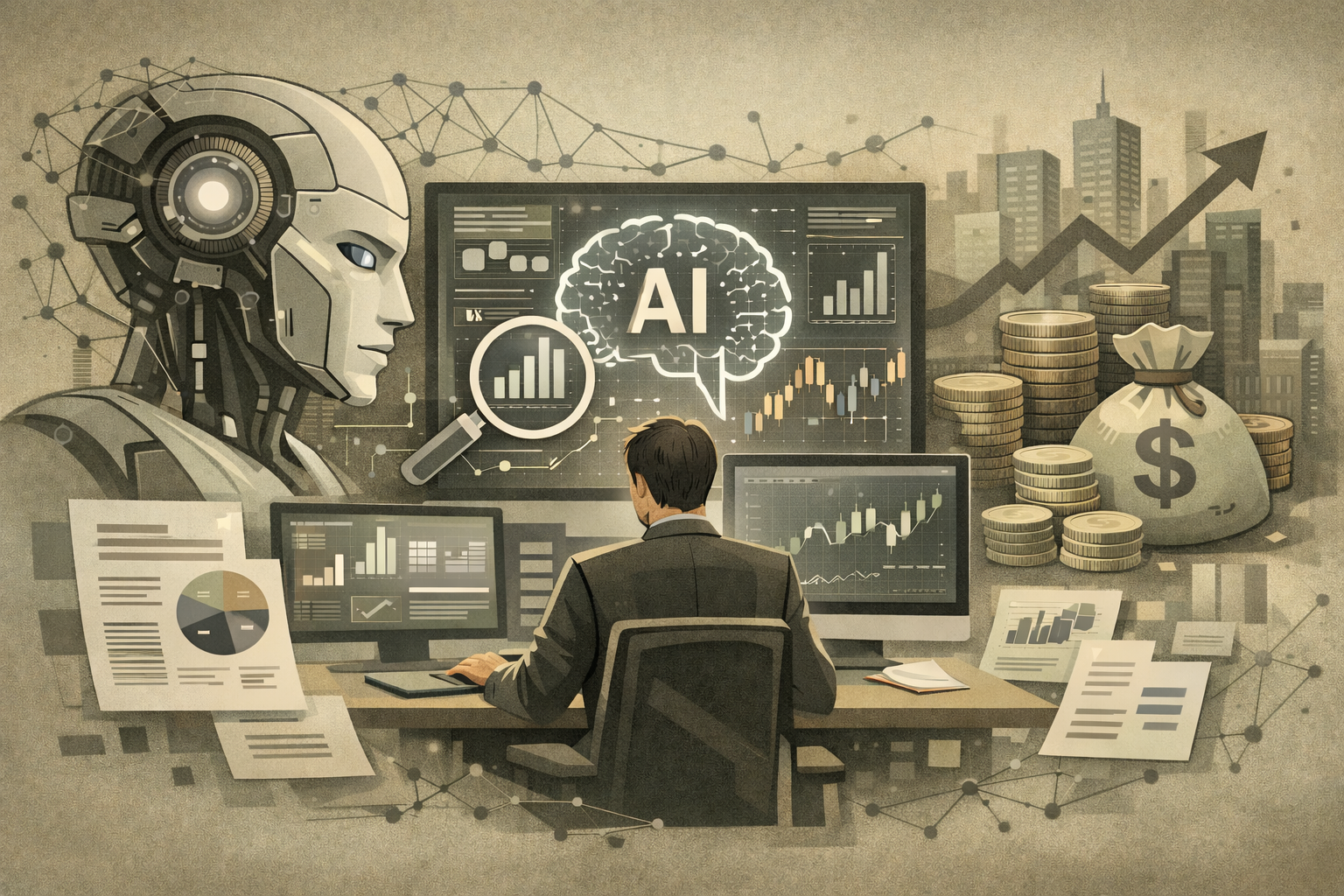
How Artificial Intelligence Is Reshaping Research in the Private Funds Market
03/09/2026
Not a day goes by at the moment when the topic of artificial intelligence (AI) doesn’t come up in some industry, somewhere.
Much of the mass media coverage of the tool in recent weeks has swung towards the negative, whether that be because of its incorporation into military processes or because of its enormous potential to erase certain jobs.
We’re not here to make moral judgements, however. But we can speculate on how AI might influence the day-to-day of the private funds market, the space we call home, because we’re seeing it evolve in real-time.
And we think that those who adapt to change will be the ones best poised to win in this new paradigm.
AI and the Evolution of Data Collection, Verification, and Cleaning
One of the most significant challenges in private markets has always been data quality. Unlike public markets, where information is widely standardized and reported in real time, private funds data often originates from multiple sources, formats, and reporting conventions. As a result, collecting, verifying, and cleaning this information has historically required a significant amount of manual effort.
AI is beginning to automate many of these processes. Machine learning models can identify patterns across datasets, flag inconsistencies, and reconcile discrepancies far more quickly than a person can. And it doesn’t get tired, of course, so can do more work, quicker. Natural language processing can also extract relevant information from unstructured sources such as regulatory filings, investor reports, or news announcements.
The benefits to users are considerable. First, better automation improves data accuracy and consistency, which ultimately leads to more reliable analysis. Second, it significantly accelerates the speed at which new information becomes usable. Instead of waiting for sometimes lengthy manual validation processes, investment professionals can access cleaner, more up-to-date datasets.
AI as a Catalyst for Faster and More Sophisticated Development
AI is also transforming how data platforms themselves are built. Increasingly, AI tools are being used by development teams to write code, generate documentation, test functionality, and identify potential issues within software environments.
Yes, there are potential hazards – just ask Amazon. But these AI-assisted development workflows allow engineering teams to build, update, and expand platforms more rapidly. Tasks that once required significant manual coding effort can now be accelerated with the help of AI agents that assist with both development and testing.
For users, the benefits are both direct and indirect. Faster development cycles mean that platforms can evolve more quickly in response to user needs. New datasets can be integrated faster, features can be refined more frequently, and improvements can be deployed with greater consistency, which all leads to providing the user with a better product, faster.
AI as a New Way to Interact with Data and Software Platforms
The two aforementioned changes, while improving database and software products and services, are largely back-end ones.
But perhaps the most visible change AI is bringing and will continue to bring to the private funds industry is how users interact with data systems themselves. Traditionally, accessing information from a data platform required navigating menus, filtering columns, or downloading datasets for further analysis, whether that be in Microsoft Excel itself or by uploading the data into an entirely different system.
AI-powered interfaces are creating a far more intuitive experience. Instead of manually constructing searches, users can increasingly ask questions in natural language, much like interacting with a generative AI tool now.
We are already seeing the movement towards this new way of working in internet search. Last summer, an Adobe survey suggested that 77% of Americans use ChatGPT as a search engine.
This trend will continue. An allocator needing to research private credit might ask a platform to identify funds with specific return characteristics, geographic exposures, or vintage-year performance. A manager might request a list of allocators in a particular area when they are travelling in that area. Service providers will do the same. The system interprets the question, searches the relevant datasets, and delivers the answer in seconds.
This conversational interface significantly lowers the barrier to data analysis. Professionals who may not have deep technical expertise can still extract sophisticated insights from complex datasets. It also allows users to explore information more dynamically, refining questions and discovering insights in real time.
Conclusion
Artificial intelligence is rapidly becoming a foundational technology in how the private funds industry works with data and software. Its impact extends far beyond simple automation. From improving the quality of underlying datasets, to accelerating platform development, to transforming the way users engage with information, AI is reshaping the entire data ecosystem.
But these advances do not replace the expertise or judgment that investment professionals bring to the market. Instead, they enhance it by reducing the friction involved in collecting, analyzing, and exploring data.
As adoption continues to grow, the firms that benefit most will be two-fold: Suppliers that view AI not simply as a tool to improve the back-end, but to provide their customers with a better way to access what they want; and customers that adopt products and services that are pushing the envelope in terms of moulding their offering to their customer base.
Editor's Picks:
Here are a handful of articles that we’ve seen recently that we found interesting. Hopefully, you do, too!
- Equity market is a paradise for stockpickers and hedge funds
- Rise of structured private credit transactions adds challenges for risk analysis
- Allocators Prefer the ‘Fluffy Airy’ Words of Private Equity to the Hard Math of Hedge Funds
- CRE CLO Issuance Surges to Start 2026, Putting 2021 Peak Levels Within Reach
- Investors spill what they aren’t looking for anymore in AI SaaS companies
 Previous